Breastfeeding Week in Spain: when it actually happens, what the evidence says, and your rights
Spain doesn't celebrate Breastfeeding Week in August. Here's when it is, what the WHO and the Spanish Paediatrics Association recommend, your workplace rights and when to ask for help.
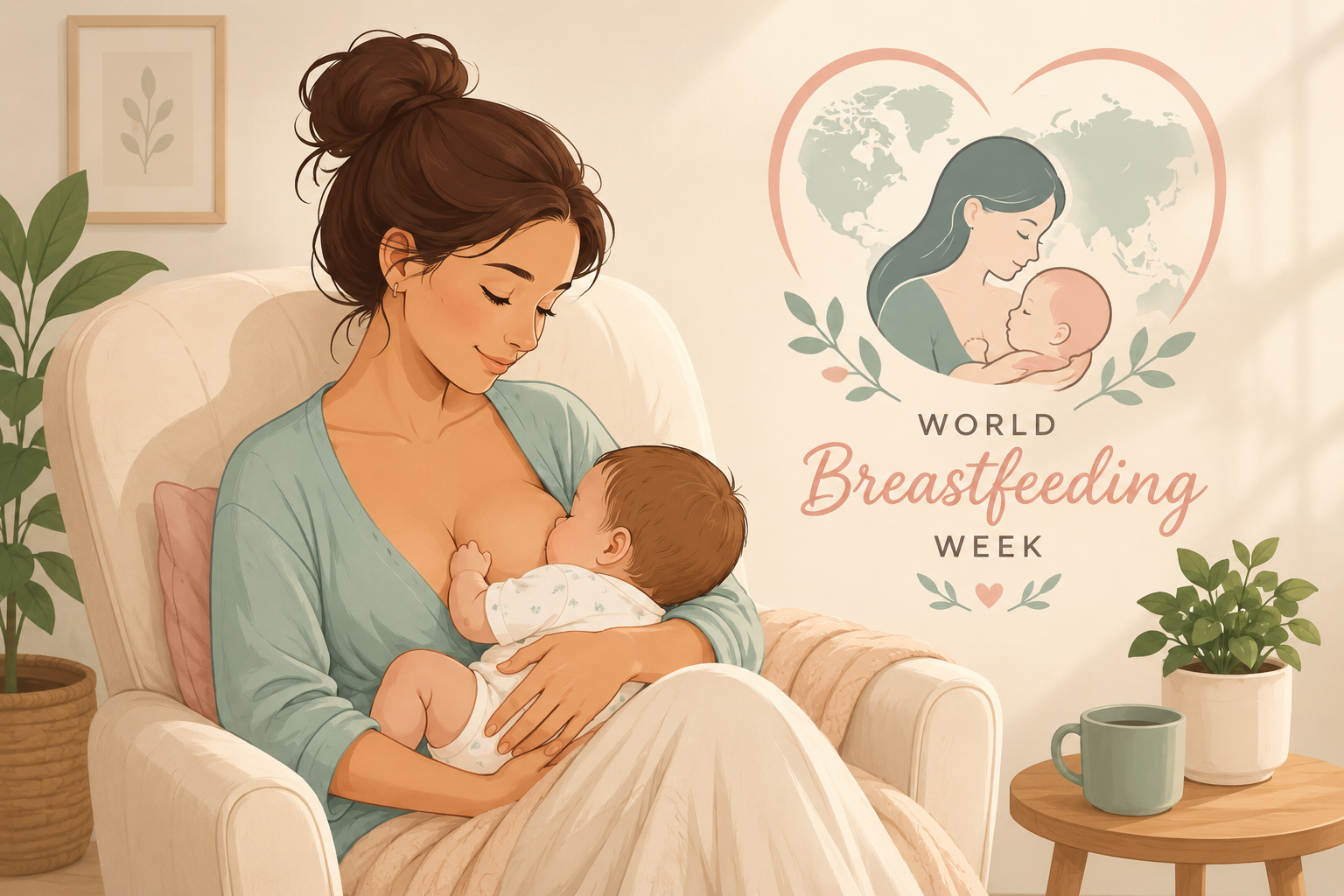
If you've searched for “World Breastfeeding Week”, you'll have found it runs from 1 to 7 August. Not in Spain.
Here — and across Europe — it's celebrated in week 41 of the year, the first week of October. Why? August is holiday season, and the date was chosen because a pregnancy starting on 1 January would most likely reach birth in that exact week. Rather lovely, actually.
The 2026 theme is “Breastfeeding for a sustainable start in life: strengthening what works”. And that's what this article is about: what actually works.
What the WHO and the Spanish Paediatrics Association say
No opinions here. This is the official guidance:
- Exclusive breastfeeding until 6 months.
- After that, breastfeeding plus complementary foods until age 2 or beyond, for as long as mother and baby wish.
- Complementary feeding should not start before 4 months, nor be delayed past 6.
- Avoid dummies and bottle teats during the first 4–6 weeks, until breastfeeding is well established.
And something worth saying clearly: a recommendation is not an obligation. How you feed your baby is your decision, and mixed or bottle feeding raises healthy, happy babies too.
Three myths that make women give up
“I don't have enough milk.” It's the most common reason for stopping — but genuine low supply affects only 2–5% of women. If your baby wets 6 or more nappies a day and is gaining weight, there's plenty of milk.
“Pain is normal.” It isn't. Pain and cracked nipples almost always mean a poor latch, not a lack of stamina. It's fixable — and fixed quickly if you ask for help early.
“If I get mastitis, I have to wean.” The opposite. Draining the breast is part of the treatment. What you do need is medical assessment.
Red flag: a red, hot, very painful area of the breast, with a fever above 38.5 °C and feeling generally unwell. That's acute mastitis and needs a doctor — not a wait-and-see approach.
If you work in Spain: your rights in 2026
Breastfeeding leave (Article 37.4 of the Workers' Statute) changed with Royal Decree-Law 2/2024, and many mothers still don't know it:
- One hour off per working day until your baby turns 9 months (splittable into two 30-minute blocks).
- Or a half-hour reduction of your working day.
- Or accumulating the hours into full days off — since 2024 this is a universal right. Your employer can no longer refuse it because your collective agreement doesn't mention it.
- It's an individual, non-transferable right for each parent. Both of you can take it, even simultaneously.
- Extendable to 12 months if both parents take it jointly, with the same duration and arrangement.
One curious detail: you don't have to be breastfeeding to qualify. The right applies regardless of how you feed your baby.
Where health insurance honestly fits in
I'm not going to tell you insurance solves breastfeeding. What it does is remove waiting times exactly when you feel them most.
The first days with a newborn don't tolerate “we'll call you in three weeks”. A latch that hurts, a crack that won't heal, a breast turning red on a Sunday afternoon. That's where having a midwife, paediatrician and gynaecologist available quickly changes the whole experience.
And here's what most people discover too late: pregnancy and childbirth cover carries waiting periods. You can't take out a policy while already pregnant and expect the birth to be covered. If you're planning a baby, now is the moment to look into it — not later.
Let's talk whenever you like
I'm Angélica Melo, exclusive Sanitas agent in Úbeda. I help families across Jaén and all of Spain understand what their policy really covers: benefits, waiting periods and the small print included.
If you're pregnant, planning to be, or simply want to know what your policy would include for maternity and paediatrics, message me on WhatsApp at +34 742 060 375 or get an instant quote, and we'll go through it calmly.
Sources: World Health Organization; Spanish Association of Paediatrics (Breastfeeding Committee); WABA; Workers' Statute (art. 37.4, amended by Royal Decree-Law 2/2024).