Wildfires in Spain: how to protect your health from smoke (official 2026 guide)
Spain's Ministry of Health has published its first guide on health risks during wildfires. Here is what it says about smoke, who is most at risk, and the 9 official recommendations to protect yourself.
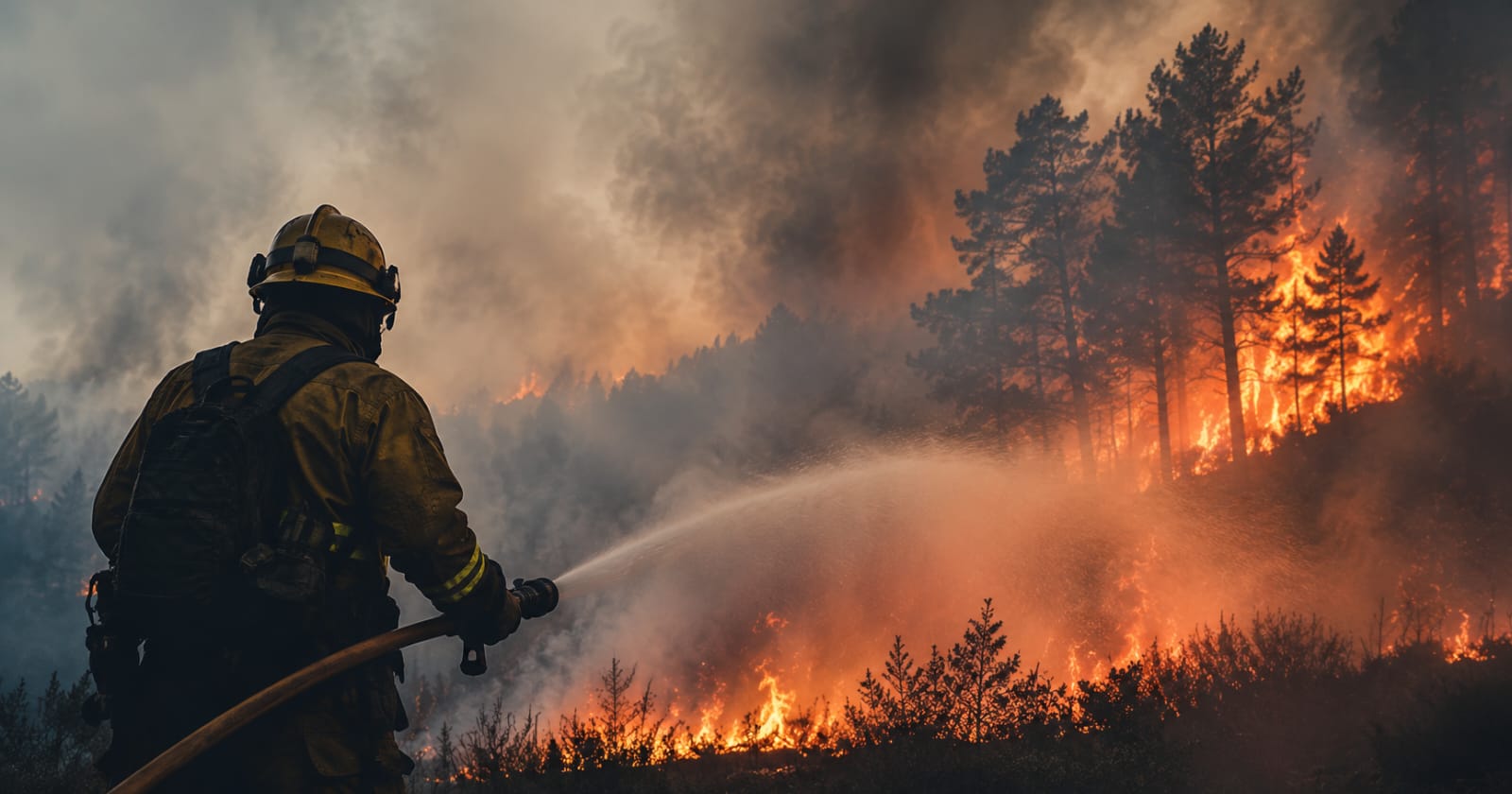
The wildfires currently affecting south-western Madrid, Ávila and Toledo have already burned more than 70,000 hectares and forced the evacuation or confinement of around 70,000 residents, according to the latest official figures. Smoke and ash have reached the city of Madrid itself, where air quality worsened noticeably over the weekend.
In response, Spain's Ministry of Health published its first specific guide on health risks during wildfires in late June, while services such as Summa 112 and Madrid Salud reinforced their public advice. Here is a summary of the essentials, based on official sources, so you know how to look after yourself and your family.
Why wildfire smoke is more dangerous than it looks
According to the Ministry of Health report “Health recommendations in wildfire situations 2026”, the fine PM2.5 particles produced by wildfire smoke can be more toxic than those from other common pollution sources such as road traffic, because of their chemical composition and high oxidative power.
The Ministry warns that even small increases in the concentration of these particles are associated with a measurable rise in overall mortality — a figure that climbs considerably higher for respiratory diseases specifically.
Who is most at risk
Health authorities agree on the following higher-risk groups:
- People over 65.
- People with pre-existing heart or respiratory conditions (asthma, COPD, etc.).
- Children, whose respiratory systems are less mature.
- Pregnant women: the Ministry guide highlights solid evidence of higher risk of premature birth and low birth weight among those exposed to wildfire smoke.
- People in more socio-economically vulnerable situations.
Official recommendations to protect your health
These are the guidelines shared by the Ministry of Health, the Madrid regional government and medical bodies such as the Spanish Respiratory Society (Separ):
- Stay indoors as much as possible while there is smoke or ash in the air, and avoid going out unless necessary.
- Close doors, windows and all external ventilation (chimneys, heating, air conditioning) so smoke cannot enter your home. If you have air conditioning, use recirculation mode with no outside air intake.
- Avoid outdoor exercise: exertion increases the amount of air — and pollutant particles — you breathe in.
- If you must go out, wear an FFP2 or N95 mask. The Ministry is clear on this: surgical masks, scarves or handkerchiefs do not filter fine smoke particles and offer no real protection.
- Protect your eyes with glasses if there is ash in the air, and wear long sleeves to reduce skin contact.
- Drink water frequently and pay attention to any respiratory symptoms, eye or throat irritation, persistent cough or dizziness.
- Do not ventilate your home as soon as the fire is out: wait for official guidance before opening doors and windows, and take extra care with food or packaging exposed to smoke or ash.
- Check the Air Quality Index (ICA) and your region's official websites regularly before going out or doing outdoor activities.
- If you have severe symptoms (difficulty breathing, chest pain, intense dizziness), contact your health centre or call 112.
If you are in an active wildfire area
If you live near the affected areas in Madrid, Ávila or Toledo, add these precautions:
- Do not go near reservoirs or recreational areas close to the fires.
- Always follow instructions from emergency services, even if your area is not officially confined.
- If there is dense smoke, do not drive: visibility can drop suddenly.
- For minor burns, apply cool running water for 20 to 30 minutes, with no home remedies. For severe burns, do not remove clothing stuck to the skin and cover the area with clean, dry cloths until help arrives.
If you live in or near an affected area, the priority is your safety and your family's: follow official instructions and track the fire through verified sources.
And once the smoke clears?
Episodes like this are a reminder that respiratory health is best looked after before, not during. Fast access to a pulmonologist, diagnostic tests or emergency care without waiting lists makes a real difference when symptoms appear. If you would like to know how you or your family would be covered, get in touch and I will prepare a personalised recommendation, with no obligation.
Sources: Spanish Ministry of Health — “Health recommendations in wildfire situations 2026”; Community of Madrid (INFOMA Plan); Summa 112 and Madrid Salud; Spanish Society of Pulmonology and Thoracic Surgery (Separ); Redacción Médica.